
How Many Abayas Do You Need for Umrah? A Practical Packing Guide
7 min read
In this piece
- The Quick Answer
- Why Fabric Matters More Than the Number
- Building Your Umrah Capsule
- What to Wear Underneath
- Getting the Fit Right
- Before You Go
There's a particular kind of packing anxiety that comes before Umrah. It isn't like packing for a holiday. You're not choosing outfits — you're preparing for days of standing, walking between Safa and Marwa, praying on floors, moving through crowds in heat that doesn't ease off after sunset.
Most guides answer this with "pack light," which is true, and not remotely useful on its own.
Packing for Umrah isn't about how much you bring — it's about choosing pieces that let you stay present through the heat, rather than distracted by it.
The Quick Answer
Key lesson
For a standard 5–10 day Umrah trip, four to five abayas is a realistic number — five to six if you're travelling in peak heat. Fewer than that and you'll be relying on laundry turnaround you may not have.
Here's why the number is higher than most lists suggest: you won't always have time, or hotel laundry access, mid-trip. And once the heat sets in, it's common to change twice a day — once you've prayed and sweated through a piece, you'll want a fresh one rather than sitting in it for hours. Two or three abayas sounds efficient on paper, but in practice it means you're either wearing something damp or losing hours you'd rather spend at the Haram waiting on a wash. Pack for the trip you'll actually have, not the one that fits neatly in a carry-on.
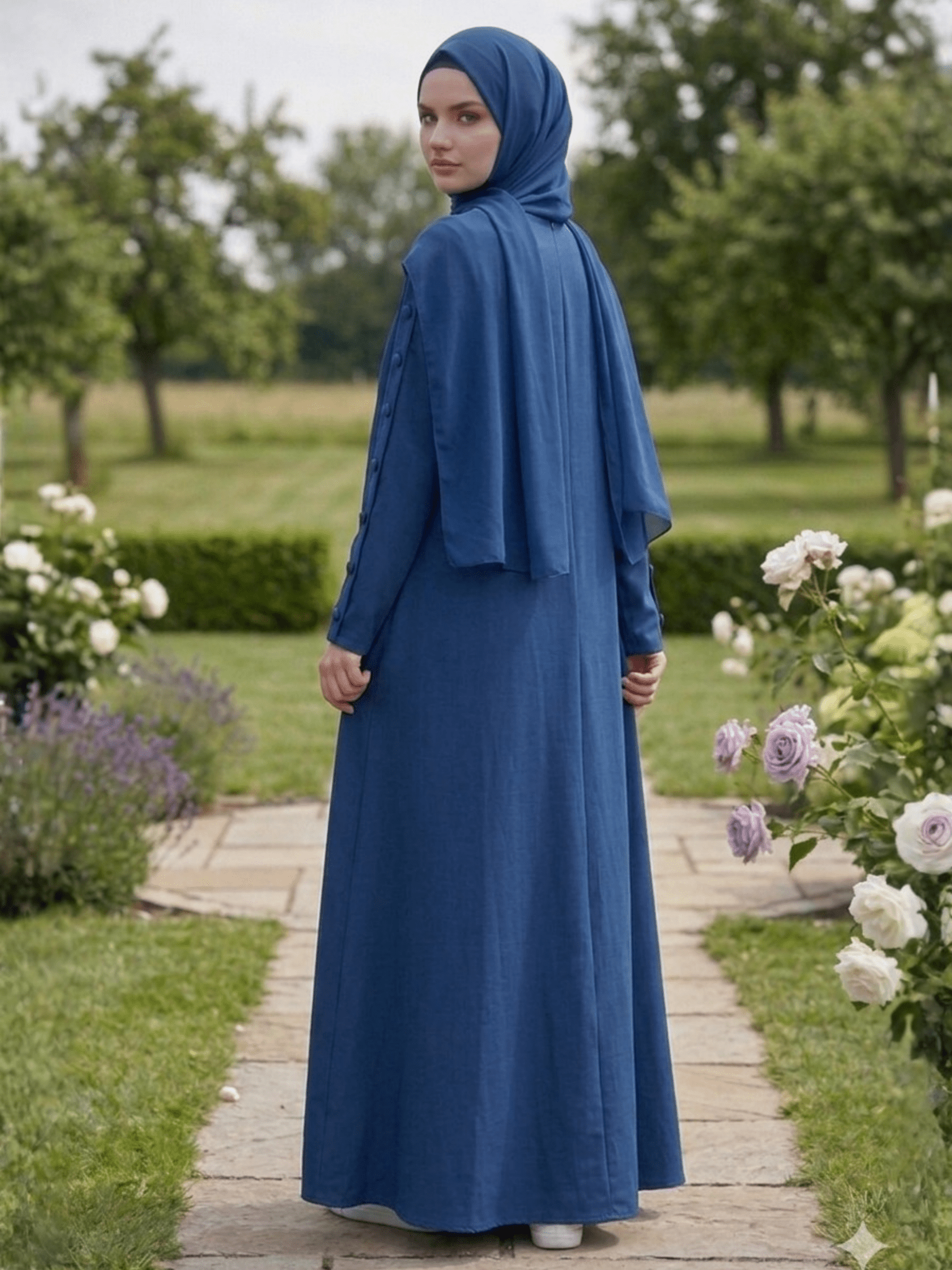
Above: Hajj & Umrah Collection — hand-cut cotton, made for exactly this kind of trip.
Why Fabric Matters More Than the Number
Before colour, before cut, fabric is where most packing lists get it wrong.
Cotton and linen are the two worth prioritising. Both breathe. Both let air move against your skin through hours of standing and walking. Both hold their shape through repeated washes. Polyester and synthetic blends do the opposite — they trap heat, cling in the humidity around the Haram, and take longer to dry between wears, which matters more when you're changing twice a day rather than once.
| Fabric | How it wears in Umrah heat |
|---|---|
| Cotton | Breathable, absorbent, gentle against skin. Structured look, stays away from the body allowing airflow. Less prone to wrinkles. |
| Linen | Airy, quick-drying, naturally supportive even in humidity. Flowy and sot. |
| Polyester / blends | Traps heat, clings when you sweat, slow to dry between washes |
If your wardrobe leans synthetic, this is the trip to leave those pieces at home.
Building Your Umrah Capsule
A simple way to think about your four to six:
- Three to four everyday abayas — cotton or linen, a relaxed rather than fitted cut. Enough to change through the day without waiting on a wash.
- One or two slightly nicer pieces — for Jummah or a Madinah visit. Still practical, but the ones you'd choose if there's a photo. Black, navy, and stone travel well; a single accent tone (burgundy, olive) adds variation without adding much weight.
- A light layer or shawl — mosques, airports, and hotel lobbies run cold even when it's 40°C outside. You'll want something to hand within the first hour of landing.
Anything past this and you're carrying weight you won't use. Fewer, and you're rationing.
"I've searched all over for cotton abayas and couldn't find any anywhere until I came across your page."
What to Wear Under Your Abaya
This gets left off most packing lists, and it matters as much as the abaya itself.
In hot weather, the layer closest to your skin is where comfort actually begins. If your bra is structured, tight, or synthetic, you'll feel it within the first hour — especially through hours of standing and prostration. A soft cotton bralette breathes, absorbs sweat, and moves with you in a way underwire and polyester blends don't.
For your legs, cotton leggings or wide-leg linen trousers manage sweat and reduce friction under a loose abaya. Leggings stay put through movement and crowds; wide-leg trousers suit anyone who dislikes anything clingy against the skin, though they can shift slightly under an abaya over a long day.
- Choose breathable cotton or linen, not polyester-heavy blends.
- If tight elastics irritate you in heat, size up on base layers specifically — comfort here is part of the worship, not a vanity concern.
- Pack at least two, so you're never stuck rewearing a sweat-through layer.
Getting the Fit Right
Here's where most advice — including, honestly, our own in the past — falls short: telling you to size up. Sizing up helps with room, but it doesn't solve the actual problem, which is that standard sizing wasn't cut with your proportions, your stride, or your movement through Tawaf and Sa'i in mind. A size-up abaya can still pull at the shoulders, drag at the hem, or bunch when you sit.
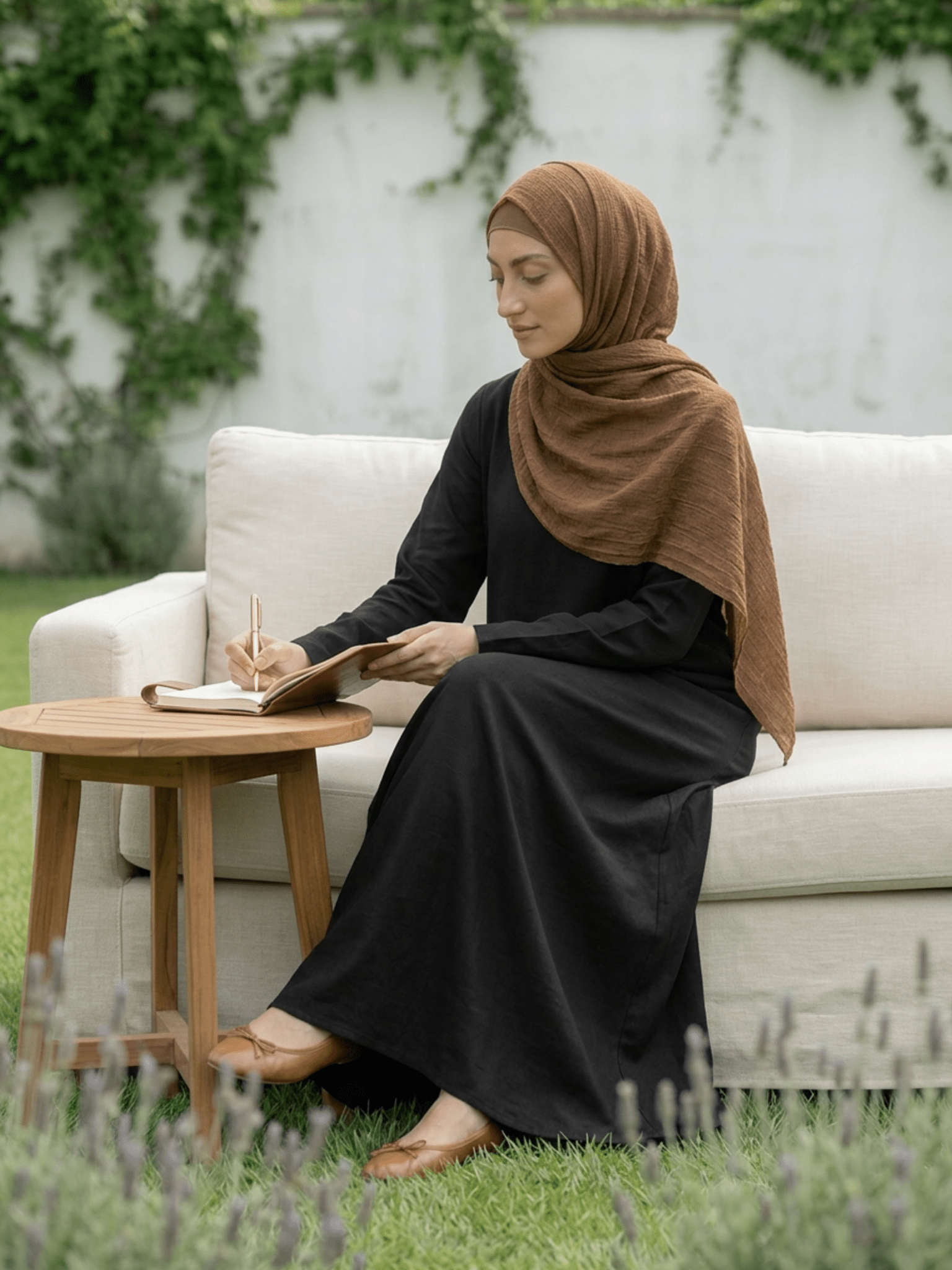
Above: Made to Measure Hajj & Umrah Abaya — cut to your own measurements, not the nearest size on a chart.
If this is a trip you're preparing carefully for — and it is — a made-to-measure Hajj & Umrah abaya is worth the extra step. You send your measurements, we cut the pattern to them, so the fit is right the first time: room where you need it to move, without the guesswork of a size chart that was never built around a day spent walking, bending, and praying. It's the difference between an abaya that fits, and one that was made to be worn for exactly this.
Made-to-measure pieces ship direct from our atelier — for the US, allow 2–3 weeks, so order with your travel date in mind.
Before You Go
Fit and fibre are what determine whether an abaya holds up over ten days of heat and movement — not how it photographs.
Our Hajj & Umrah collection is 100% cotton and linen, ready to wear if your trip is close. If you have a little more time before you travel, made-to-measure is worth the wait.
May your journey be light on your body, and heavy on the scales.


